

All Plants :: All Trees and Shrubs
Viburnum carlesii
Korean Spice Viburnum
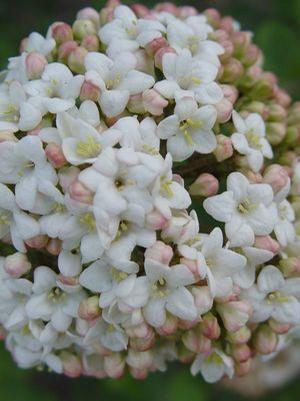

- Heavenly fragrance
- Pink buds open to creamy white flowers
- Leathery, deep green foliage
- Mini white snowball flowers
- Deep green foliage that is wine red in fall


Homeowner Growing and Maintenance Tips:
Prefers average to loamy, medium moisture, well-drained soil and full to partial sun. Tolerates a wide range of soil conditions. Somewhat drought tolerant once established, salt tolerance varies by species. Pruning can be done right after flowering or for shaping and size control when dormant in winter. Plants can be fertilized annually in spring with an organic fertilizer. Some species may sucker, these can be removed if desired. Mulching is beneficial.
Additional Characteristics & Attributes:
Attributes:
- Mass Planting
- Cold Tolerant
- Salt Tolerant
- Fragrant
- Garden
- Border or Bed
- Low Maintenance
- Specimen
- Drought Tolerant
Critter Resistance:
- Rabbit Resistant
- Deer Resistant
Exposure:
- Full Sun
- Partial Sun
Habit:
- Upright
Foliage Color:
- Dark Green
Season of Interest (Flowering):
- Spring
Season of Interest (Foliage):
- Fall
- Summer
Attracts Wildlife:
- Attracts Songbirds
- Attracts Pollinators
- Attracts Butterflies
Soil Moisture:
- Average Water
- Moist, Well-Drained
Genus Overview: Viburnum
Common Name: Viburnum
Upright, rounded, multi-stemmed, deciduous shrub with broad ovate, serrate, sometimes glossy, green leaves. Fall color varies by species but may be yellow, dull red or burgundy. Fragrant or non-fragrant white flowers in rounded or flattened clusters bloom in spring. Flowers are followed by berry-like drupes wich mature to blue-black in late summer to fall. Great for group plantings, shrub borders, hedges and foundation plantings. Viburnum dentatum and lentago are native.