


All Plants :: All Trees and Shrubs
Myrica pensylvanica
Northern Bayberry
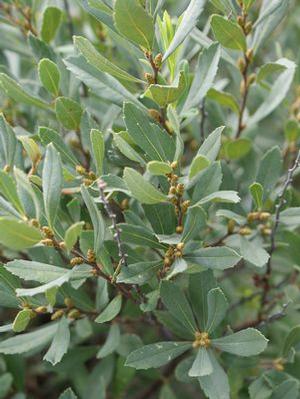

- Native plant that is tolerant of sea spray
- Aromatic leaves
- Berries used in soaps, candles, and household products


Homeowner Growing and Maintenance Tips:
Prefers moist or dry, average to sandy, acidic, well-drained soil and full sun to partial shade. Tolerates a wide range of soil and growing conditions including poor and wet soil, drought and high winds. Mass plantings need at least one male plant to pollinate the females and result in fruit. Shrubs will sucker to form large colonies in good conditions. Light pruning can be done in late winter or early spring if necessary.
Additional Characteristics & Attributes:
Attributes:
- Great Foliage
- Fall Color
- Vigorous
- Salt Tolerant
- Fragrant
- Garden
- Border or Bed
- Cold Tolerant
- Native
- Mass Planting
- Drought Tolerant
- Low Maintenance
- Naturalizing
Critter Resistance:
- Deer Resistant
- Rabbit Resistant
Exposure:
- Full Sun
- Partial Sun
Habit:
- Upright
Foliage Color:
- Green
Season of Interest (Flowering):
- Spring
Season of Interest (Foliage):
- Summer
Attracts Wildlife:
- Attracts Songbirds
- Attracts Butterflies
Soil Moisture:
- Average Water
- Moist, Well-Drained
- Dry Soil
Genus Overview: Myrica
Common Name: Northern Bayberry
Dense-branching, deciduous shrub with narrow, pointed, glossy, gray-green leaves that are aromatic when crushed. Burgundy fall color. Not very showy yellow-green catkins bloom in late spring and are followed by clusters of tiny, grayish-white fruits in late summer which ususally remain through winter. Great mass planted, in woodland gardens, shrub borders or as an informal hedge.