


Lamium maculatum 'Chequers'
Dead Nettle
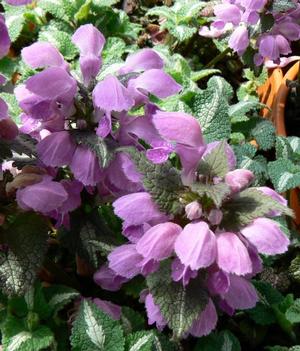
Lamium maculatum 'Chequers' - Spotted Deadnettle from Moose Crossing Garden Center

- Rose colored, hooded flower clusters
- Blooms mid spring to early fall
- Variegated, heart-shaped leaves
- Excellent ground cover for dry shade

Border or Bed

Drought Tolerant

Great Foliage

Ground Cover

Low Maintenance

Mass Planting

Salt Tolerant
Homeowner Growing and Maintenance Tips:
Great foliage to brighten up a shady spot Prefers part - full shade and average - rich, well drained soil Easily adapts to dry, shady area Shear back to 4-6" if plant becomes lanky
Height: 8-12 in
Spread: 18-24 in
Spacing: 6-10 in
Price Level 1: $7.99 ea.~#1
Bloom Color: Pink
Zone: 2-9
Price Level 2: 5 for $35~#1
Additional Characteristics & Attributes:
Attributes:
- Great Foliage
- Drought Tolerant
- Vigorous
- Naturalizing
- Mass Planting
- Edging
- Summer Bloomer
- Salt Tolerant
- Ground Cover
- Border or Bed
- Low Maintenance
Critter Resistance:
- Rabbit Resistant
- Deer Resistant
Exposure:
- Partial Sun
- Full Shade
Habit:
- Creeping/Ground Cover
- Trailing
- Mounding
Foliage Color:
- Dark Green
- Variegated
- Silver
Season of Interest (Flowering):
- Spring
- Summer
Attracts Wildlife:
- Attracts Pollinators
Soil Moisture:
- Average Water
- Moist, Well-Drained
- Dry Soil
Genus Overview: Lamium
Common Name: Dead Nettle
Low-growing, groundcover perennial. Oval, slightly pointed, green leaves, sometimes with silver overlay. Small clusters of red-purple, white or pink flowers bloom late spring to early summer. Plants will grow vigorously as a groundcover in good conditions but are not considered too aggressive.