


Juglan nigra
Black Walnut
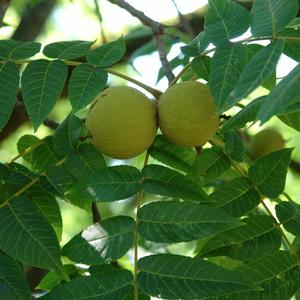

- Host plant for over 100 butterfly/moth species!
- Native species
- Tall, shade tree
- Edible nuts


Homeowner Growing and Maintenance Tips:
Prefers moist, organically rich, well-drained soil and full sun. Avoid planting in shade. Plants are difficult to transplant due to their deep taproot. Young trees may produce nuts at 4-6 years old but often it takes up to 20 years for a large crop of nuts. Plants benefit from fertilization but do your research as to the correct age of the tree and how often it is best to fertilize.
Additional Characteristics & Attributes:
Attributes:
- Native
- Fall Color
- Salt Tolerant
- Low Maintenance
- Edible
- Heat Tolerant
Exposure:
- Full Sun
Habit:
- Upright
Foliage Color:
- Green
Season of Interest (Flowering):
- Spring
Attracts Wildlife:
- Attracts Pollinators
- Attracts Butterflies
- Attracts Songbirds
Soil Moisture:
- Average Water
- Moist, Well-Drained
Genus Overview: Juglan
Common Name: Black Gem Walnut
Large, deciduous tree with an oval to rounded crown and sharply ridged, dark-gray-black bark. Compound green leaves have 13 to 23 pointed leaflets and are aromatic when crushed. Yellow fall foliage. Yellow-green flowers appear in late spring with drooping catkins. Flowers are followed by edible nuts in yellow-green husks, maturing in fall. Great for lanscape use in areas with plenty of space.