


Gaultheria procumbens
Creeping Winterberry
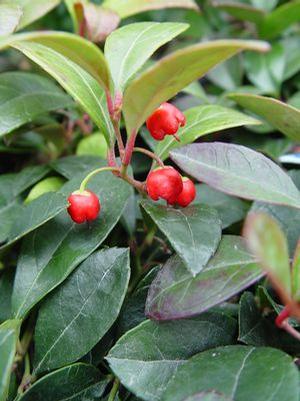
Image courtesy of Prides Corner Farms

- Low growing evergreen groundcover
- Edible red berries in winter
- Tough, dense, and compact
- Red tinged foliage in fall-winter

Border or Bed

Cold Tolerant

Container

Drought Tolerant

Evergreen

Great Foliage

Ground Cover
Homeowner Growing and Maintenance Tips:
Prefers rich, consistently moist, acidic, well-drained soil. Grows best in part to full shade. Tolerates some dry conditions once established. Great for borders, banks and slopes, rock gardens and woodland gardens. Propagate by seed or semi-hardwood cuttings. Pruning can be done right after flowering.
Height: 3-6 in
Spread: 6-12 in
Price Level 1: $29.99~#1
Bloom Color:
Zone: 3-8
Additional Characteristics & Attributes:
Attributes:
- Edging
- Drought Tolerant
- Cold Tolerant
- Native
- Great Foliage
- Border or Bed
- Fall Color
- Naturalizing
- Evergreen
- Container
- Summer Bloomer
- Rock Garden
- Ground Cover
Critter Resistance:
- Deer Resistant
Exposure:
- Full Sun
- Full Shade
- Partial Sun
Habit:
- Creeping/Ground Cover
Foliage Color:
- Dark Green
Season of Interest (Flowering):
- Summer
Season of Interest (Foliage):
- Winter
Attracts Wildlife:
- Attracts Songbirds
- Attracts Pollinators
- Attracts Butterflies
Soil Moisture:
- Average Water
- Moist, Well-Drained
Genus Overview: Gaultheria
Common Name: Creeping Winterberry
Low growing, spreading, evergreen shrub. Prostrate stems with clusters of glossy, rounded, leathery leaves. Leaves turn reddish in winter. Small, nodding white or pinkish, bell-shaped flowers in summer. Scarlet berries follow the flowers and persist into winter, eaten by wildlife. Plants will spread over time.