


Dianthus barbatus 'Barbarini Red Picotee'
Sweet William
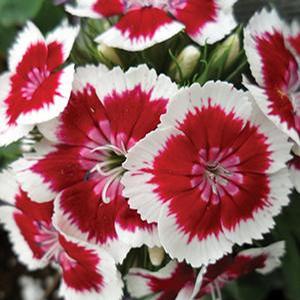
Photo courtesy of Swift Greenhouses

- Red with white edged flowers
- Produces showy clusters of fragrant blooms
- Low, compact habit
- Dwarf variety

Border or Bed

Container

Cut Flower/ Foliage

Drought Tolerant

Evergreen

Fragrant

Garden
Homeowner Growing and Maintenance Tips:
Prefers organically rich, neutral to slightly alkaline, well-drained soil. Grows best in full sun with some afternoon shade in hot summer climates. Deadheading extends flowering time and helps maintain plant vigor. Allow some flower heads to remain and set seed if self-seeding is desired. Plants can be divided in spring as new growth appears.
Height: 4-8 in
Spread: 8-12 in
Spacing: 4-8 in
Price Level 1: $7.99 ea.~#1
Bloom Color: Red, White
Zone: 5-9
Price Level 2: 5 for $35~#1
Additional Characteristics & Attributes:
Attributes:
- Focal Point
- Garden
- Border or Bed
- Drought Tolerant
- Salt Tolerant
- Great Foliage
- Evergreen
- Container
- Summer Bloomer
- Fragrant
- Edging
- Cut Flower/ Foliage
- Rock Garden
- Mass Planting
Critter Resistance:
- Rabbit Resistant
- Deer Resistant
Exposure:
- Full Sun
Habit:
- Mounding
- Upright
Foliage Color:
- Green
Season of Interest (Flowering):
- Summer
- Spring
Attracts Wildlife:
- Attracts Pollinators
- Attracts Butterflies
- Attracts Hummingbirds
Soil Moisture:
- Moist, Well-Drained
- Average Water
Genus Overview: Dianthus
Common Name: Sweet William
Biennial or short-lived perennial prized for its flowers. Densely packed clusters of small flowers, single or double, in a wide variety of colors and bicolors such as pink, purple, white and magenta. Blooms late spring through summer. Prostrate rosettes of wide, lance-shaped green leaves. Great for cottage gardens, beds and borders or as an edging plant.